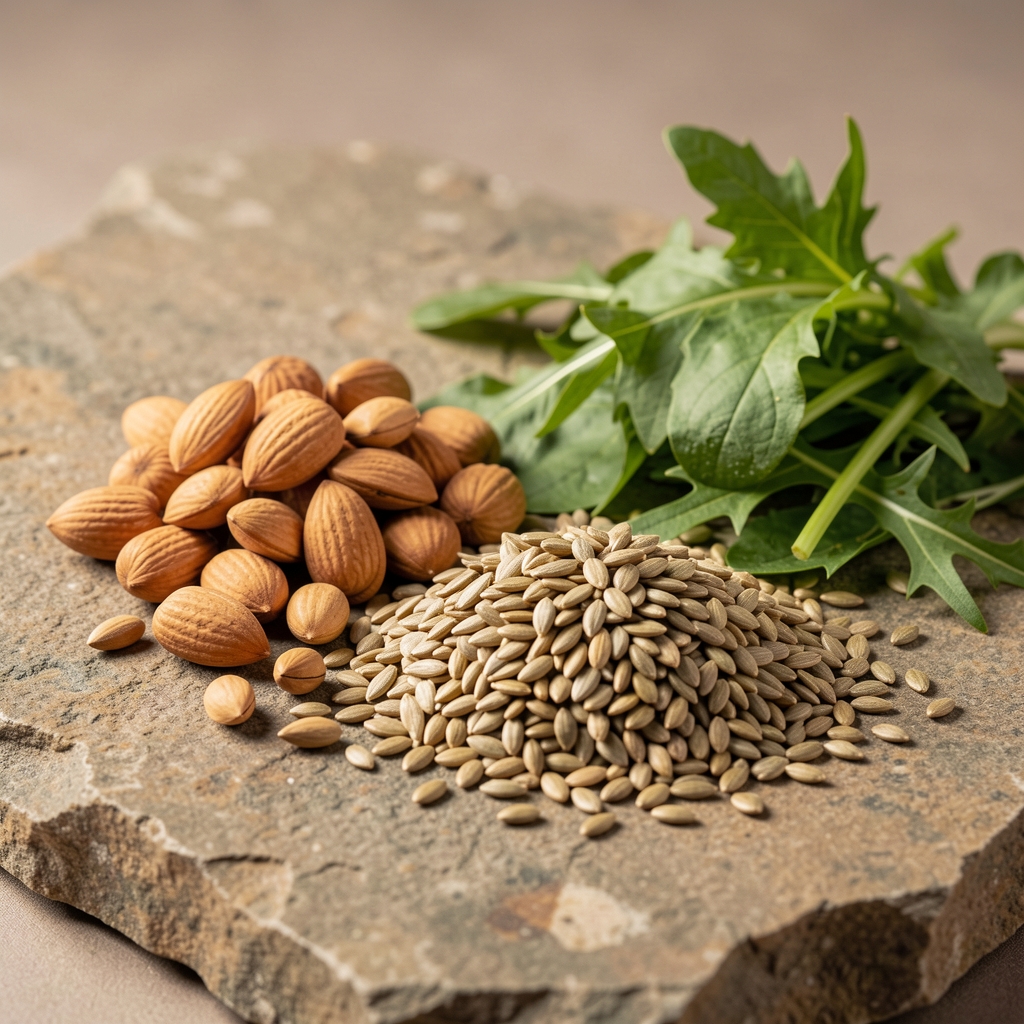
What Whole-Food Sourcing Actually Means
Whole-food sourcing refers to ingredients derived from recognisable plant or food materials, minimally processed to retain their native nutrient matrix. This stands in contrast to synthetic isolates or extracted fractions. The term appears frequently in formulation marketing, yet the verification standard varies dramatically across suppliers.
A genuinely whole-food-sourced ingredient retains the full spectrum of naturally occurring cofactors, enzymes, and phytonutrients present in the original material. For instance, a whole-food vitamin complex sourced from organic guava fruit contains not just ascorbic acid but also bioflavonoids, polyphenols, and trace minerals present in the fruit matrix. The question becomes: how can the consumer verify this claim beyond the supplier's own assertion?
The answer lies in batch documentation. Each production run should be accompanied by a certificate of composition — a third-party laboratory analysis confirming the ingredient profile, heavy metal screening, microbiological status, and the absence of adulterants or synthetic fillers. Without this record, the term "whole-food sourced" remains functionally unverifiable.
Certificate-of-Composition Standards
A certificate of composition is a laboratory-issued document that confirms the nutrient profile and purity of a given ingredient batch. It typically includes quantitative analysis of active constituents, a screen for contaminants (heavy metals, pesticides, mycotoxins), and microbiological testing for pathogens and mold. This certificate is issued independently of the formulator, providing an objective verification layer.
Not all certificates are equivalent. Some suppliers provide only minimal assay data — confirming the presence of a single marker compound without addressing the full nutrient matrix. High-standard certificates include chromatographic profiles showing the full spectrum of phytonutrients, amino acids, or mineral cofactors present in the ingredient. The more comprehensive the analysis, the more confidence the consumer can have in the ingredient's authenticity and quality.
Batch-specific certificates are essential because ingredient quality can vary between harvests, processing runs, and storage periods. A certificate dated six months prior to the batch you receive is not a reliable indicator of current quality. Batch-specific means each production lot you purchase should be traceable to a unique certificate number, dated to that specific run.
Why Marketing Claims Are Insufficient
Marketing language is designed to persuade, not to verify. Terms like "premium quality," "superior absorption," "synergistic blend," and "advanced formulation" carry no regulatory definition and require no supporting evidence. A label can state "whole-food sourced from organic farms" without disclosing which farms, which harvest date, or whether any independent testing has confirmed organic certification and compositional integrity.
This ambiguity is not accidental. In markets with minimal supplement oversight, suppliers face little consequence for vague or unsubstantiated claims. The burden shifts to the informed consumer to demand documentation. When a formulator provides batch certificates, traceability logs, and third-party testing results proactively, it signals a different level of operational transparency.
Contrast this with suppliers who refuse to share certificates on request, citing "proprietary formulation" or "trade secret" as reasons. Certificate-of-composition data does not disclose formulation ratios or blending methods; it confirms ingredient purity and composition. Refusal to provide this documentation is a red flag, suggesting either the supplier does not possess such records or the records would reveal quality shortfalls.

Practical Steps for Verification
When assessing a new formulation, request batch-specific certificate-of-composition documentation before purchase. This request should include:
- ● Laboratory name and accreditation details (ISO/IEC 17025 certification preferred)
- ● Batch or lot number matching the product you intend to purchase
- ● Testing date within the past six months
- ● Full compositional analysis, not just a single marker assay
- ● Heavy metal screen (lead, cadmium, mercury, arsenic) with pass/fail thresholds noted
- ● Microbiological testing results (total plate count, yeast, mold, coliforms)
Reputable suppliers provide this documentation as a matter of routine, either on their website or upon request via email. If documentation is not readily available, contact the supplier directly. A legitimate business will respond promptly and transparently. Evasive or vague responses suggest the documentation does not exist or does not meet the standards the marketing claims imply.
Once obtained, review the certificate carefully. Check that the laboratory is independent (not an in-house facility) and holds recognised accreditation. Verify that the batch number on the certificate matches the batch printed on your product label. Confirm that all tested parameters fall within acceptable limits. This process takes minutes but provides significantly more assurance than brand reputation or price point alone.
Integration Into Daily Routine
Once ingredient quality is verified, the next consideration is how the formulation integrates into a structured daily routine. Batch-documented ingredients provide confidence in consistency — a critical factor when nutrition is part of a calibrated approach to energy metabolism, recovery, and sustained performance over the working week.
For active men following outdoor fitness protocols, morning nutrition timing and composition matter. A verified whole-food mineral complex taken with protein-rich breakfast supports stable energy output without the variability that comes from poorly sourced or synthetic isolate formulations. This consistency allows the user to isolate other variables — training intensity, sleep quality, hydration — without questioning whether the nutritional baseline is sound.
Articles published on Talveron Journal are editorial in nature and reflect the writers' observations on everyday wellness practices. The content is not intended as professional advice, nor as guidance for the management of any specific condition. Readers with specific concerns about their daily routines are encouraged to speak with a qualified wellness professional.